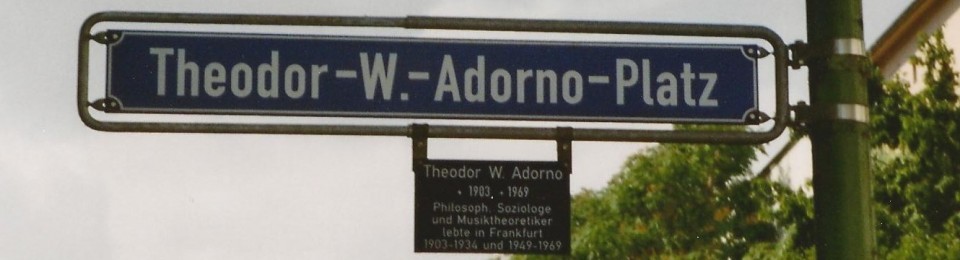
Rachel Rosner’s book, Adorno and the Question of Theology: Religion and Reason Beyond Foundations, will be published with Bloomsbury in May 2026. Click here to access the book from the publisher’s website. Request for a copy from Bloomsbury for review purpose can be submitted to here.
Rachel Rosner is a postdoctoral fellow at the Vidal Sassoon International Center for the Study of Antisemitism and the Christosemitism ERC Project at the Hebrew University of Jerusalem. She received my PhD in Philosophy from Bar-Ilan University October, 2025, and my MA in Philosophy from Northwestern University.
Her book develops a sustained interpretation of Theodor W. Adorno’s engagement with theology, arguing that his use of theological language is neither residual nor instrumental, but central to his critique of foundational reason. It show how Adorno’s method of constellation offers a model of critique that resists both secular reduction and metaphysical retrieval, with implications for debates in Critical Theory, philosophy of religion, and postsecular thought.
Here is the publisher’s blurb:
Can we move beyond the religious–secular divide and live together ethically in a shared political world?
Adorno and the Question of Theology: Religion and Reason Beyond Foundations says yes-and shows how. Through close readings of Dialectic of Enlightenment, Negative Dialectics, and Aesthetic Theory, Rachel R. Rosner examines how Adorno reconfigures the relationship between reason and theology to confront modern fragmentation. Drawing on Adorno’s usage of constellation-a way of thinking that connects ideas without locking them into fixed systems-Rosner offers a way to move beyond entrenched dichotomies. In doing so, the book intervenes in contemporary debates on postsecular theory, critical reason, and political theology by rethinking how normativity and critique operate without foundations. Accessible to newcomers and illuminating for specialists, this book serves as both an introduction to Adorno’s comprehensive philosophy and a path beyond enduring paradoxes in his reception.
What they said:
Adorno’s sporadic, under-justified invocation of certain theological concepts has
confounded all who remember his debts to those resolute atheists Marx and Freud.
Reading negative dialectics as a strategy eschewing the search for firm foundations,
transcendent truths and teleological goals, Rachel R. Rosner makes an arresting case for
their crucial function in an historically dynamic conceptual constellation that resists the
gravitational pull of the status quo.
—Martin Jay, Ehrman Professor of European History Emeritus,
University of California, Berkeley, USA
Adorno scholars disagree about why and how he uses theological concepts such as
redemption. Are they merely rhetorical? Metaphorical? Inversely or negatively theological?
Through careful and creative reconstruction, Rachel R. Rosner offers a new and thought-
provoking account of how theological concepts figure in Adorno’s thought and shows the
relevance of his approach today.
—Lambert Zuidervaart, Resident Fellow, Theory Centre, Western University, CAN
